The Anti-Worksheet: Building a Pocket-Sized Reset Console
Still the Driver started as a coaching problem, not an app idea: what do you do when the decision is clear, but your nervous system keeps dragging every anxious thought into the front seat?


Still the Driver started as a coaching problem, not an app idea: what do you do when the decision is clear, but your nervous system keeps dragging every anxious thought into the front seat?
Nobody has ever, in the history of being overwhelmed, stopped mid-spiral and said “hold on, let me find that PDF.”
I built a custom app for a coaching client because I think worksheets are boring and ineffective. When you’re stuck in something, ruminating, looping, overthinking, you need the tool to be right there. Not filed away in a Google Drive folder you forgot you had.
I see the skills land. The concepts make sense. When I’m talking to a client, everything clicks. The problem isn’t learning the tool. The problem is reaching for it
Old patterns are deeply grooved. When you’re overwhelmed, you don’t go looking for the new skill. You fall back on what’s already there, even if it’s not working. The familiar path is always easier to find than the new one, especially when you’re flooded. New skills take practice
So instead of handing this client another document to practice with, I built her a place where the things that already worked were just… there. Right in her pocket.
This is something I’ve done since grad school. Back then I was working with a kid who had severe anxiety and couldn’t care less about evidence-based intervention models. She wanted to play. She loved Frozen. Honestly, so did I. “Let It Go” was basically ambient noise that year.
One day on the way to work it hit me: this is a perfect anxiety metaphor. “Let it go.” “Don’t let them in, don’t let them see.” Even “conceal, don’t feel” as a description of how anxiety traps us. I thought of her immediately.
So I tried it. We listened to the song together and I used it to explain what anxiety was doing and how to let it go.
It worked.
In grad school, they taught us to “meet clients where they are.” I’ve always taken that literally. I don’t bring a system and try to get someone to fit into it. I build around them.
Ten years ago, that meant using Disney songs to explain emotional regulation. Today, it means opening a code editor and building a custom web app so someone doesn’t have to fight a generic PDF when their brain is already fighting everything else.
When I sat down to build this app, I gave myself a few rules to make sure I wasn’t accidentally building another digital chore.
One of the first things I asked this client was: what’s your favorite color?
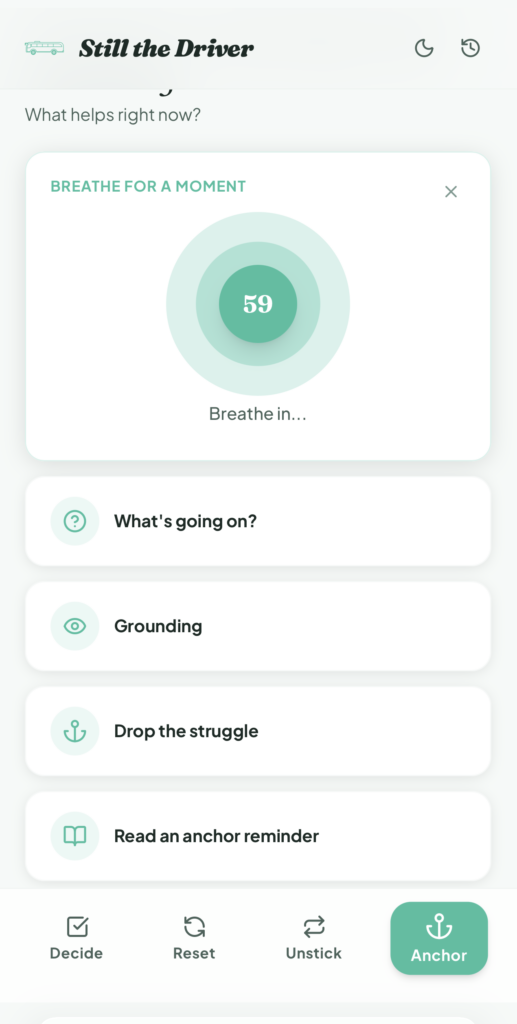
She said pastel mint. And then she listed off a few more pastels she liked. And she was almost a little nervous about it, like maybe that wasn’t a serious enough answer for a mental health tool.
I loved it. I built the entire app around it.
That matters more than it sounds like it does. Because how many times has someone like her been handed a tool that looks like a clinical intake form and told to use it? How many apps default to sterile white and hospital blue because that’s what “wellness” is supposed to look like? If an app looks like a medical chart, your nervous system is going to treat it like a doctor’s appointment.
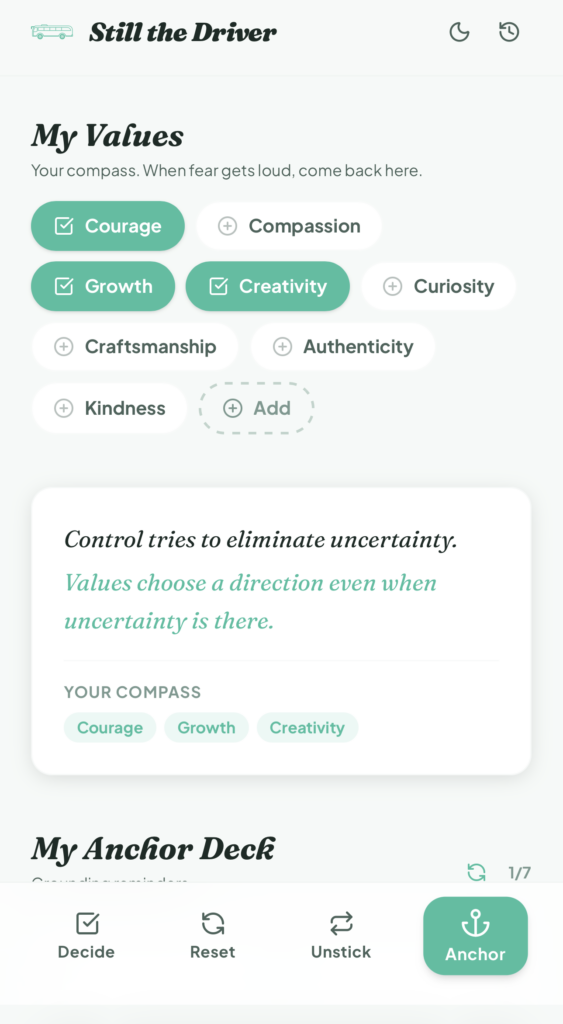
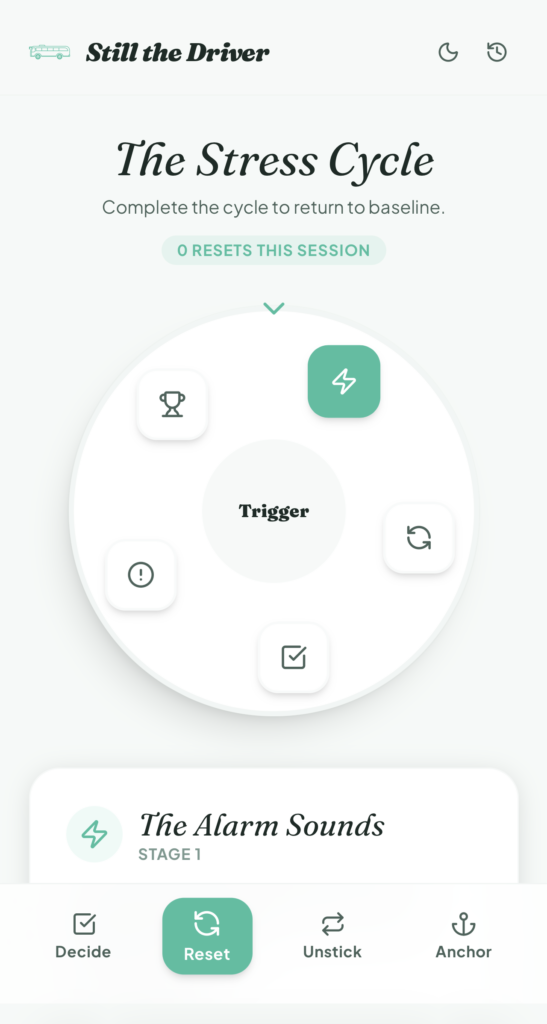
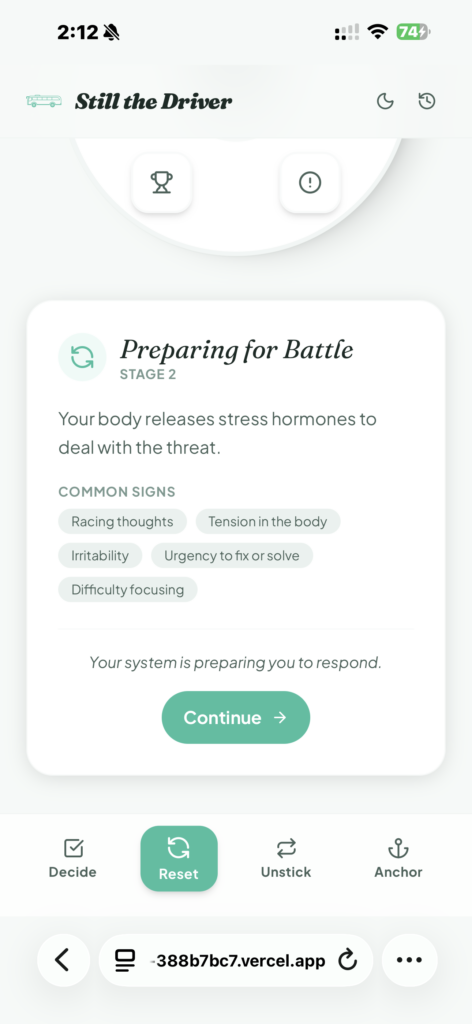
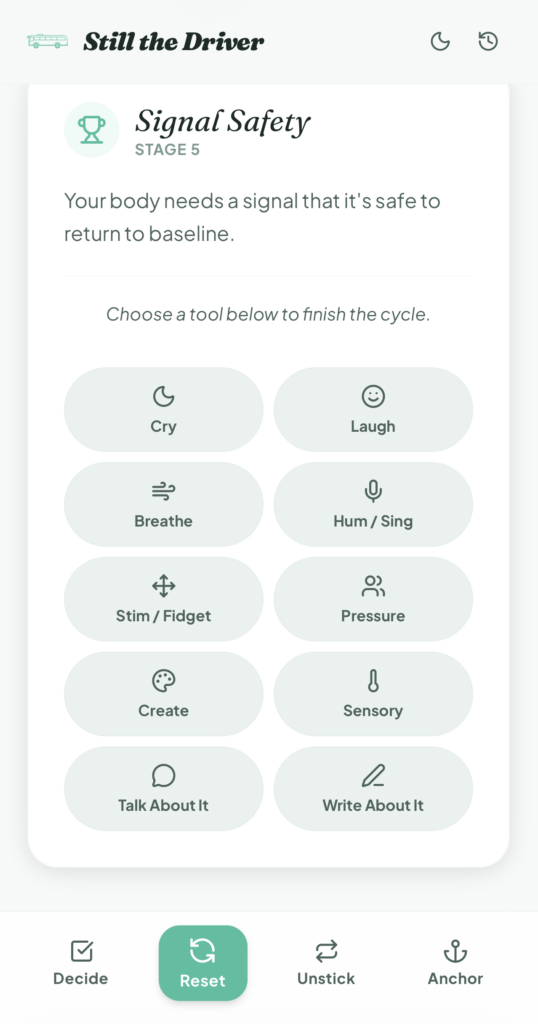
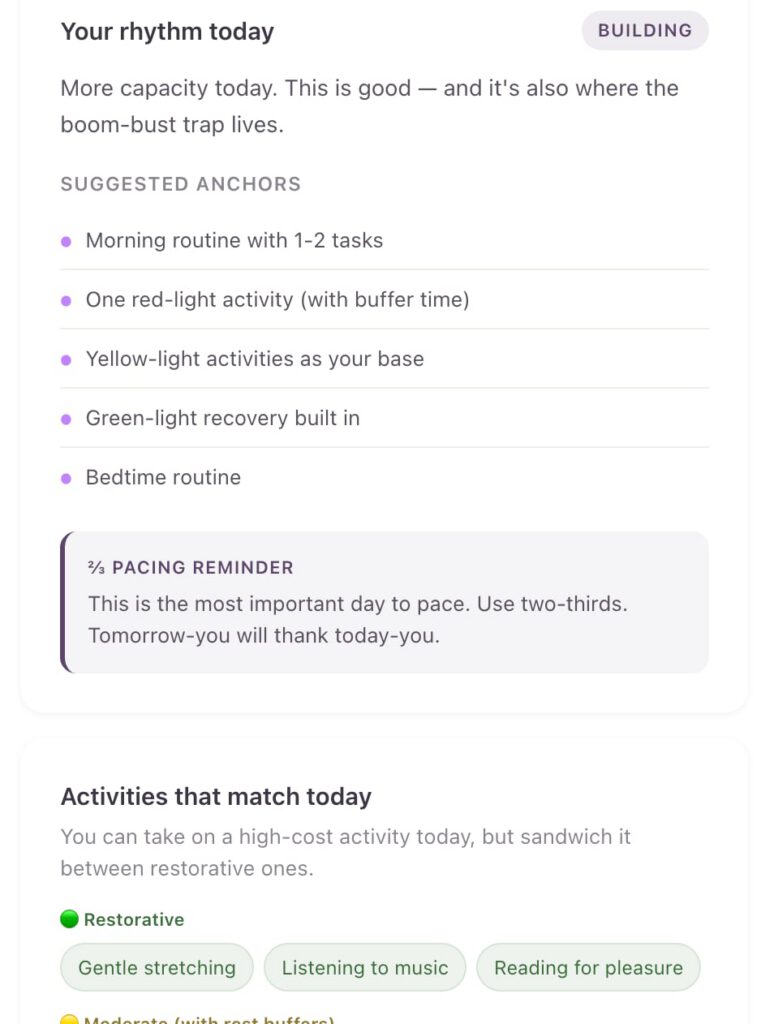
I wanted this thing to feel like hers. So I anchored the whole design around her pastel mint. Warm enough to feel friendly, muted enough to not overstimulate. The background is soft, not stark white. Instead of reading a bulleted list about stress, she interacts with a Stress Cycle Wheel. When she finishes a cycle (a two-minute breathing exercise, shaking it off, even just humming) the app gives her a soft mint glow as feedback.
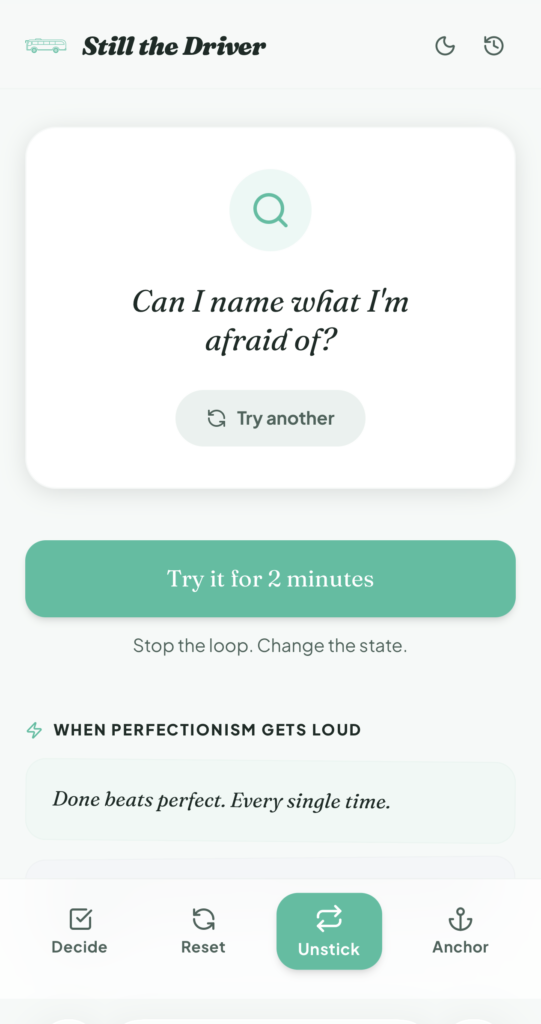
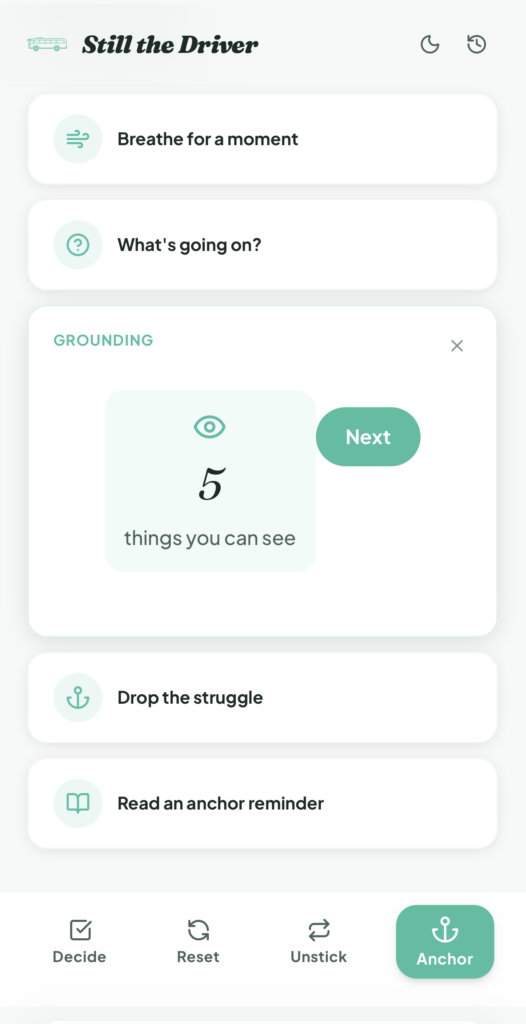
I didn’t invent new tools for this client. I took the ones we’d already built together in session and put them somewhere she could actually reach them.
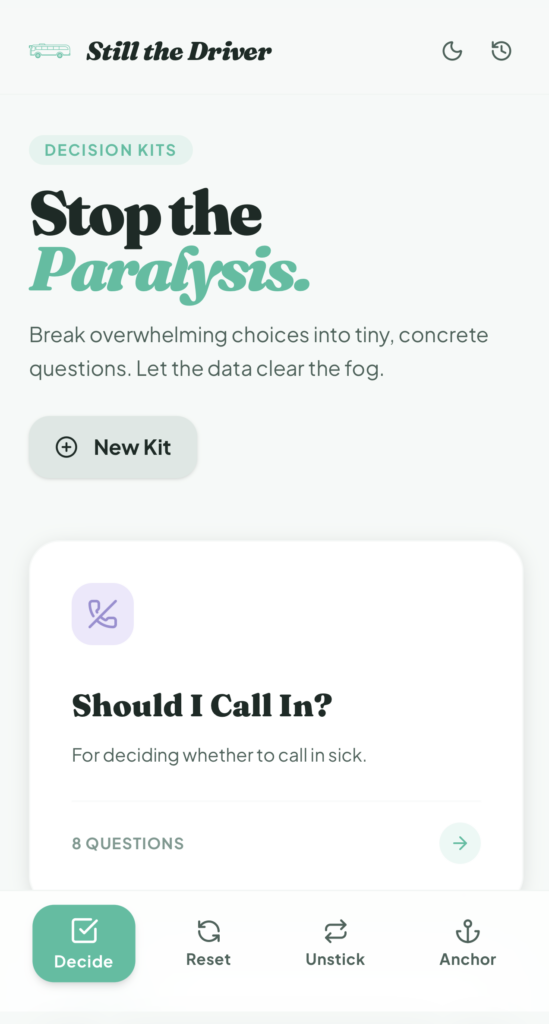
The best example is a Decision Kit called “Should I Call In?” This client would get stuck on whether to call in sick to work. Not because she didn’t know the answer, but because the decision felt enormous and emotional when she was already overwhelmed. So we sat down together and broke it into operational logic. Eight concrete questions. “Did I sleep last night?” “Do I have a headache?” “Can I breathe okay?” “Can I eat breakfast?”
They look simple. They’re not. Every question is there for a reason
“Can I breathe okay?” is there because this client has a sensory thing with nasal congestion. It doesn’t just make her uncomfortable. It makes everything else worse. When her nose is clogged, her whole tolerance drops. That’s not in any generic self-assessment. That’s something I know because we talked about it.
That’s not something I pulled from a workbook. That’s something we co-created because I know this client thinks in logic, not in emotion. She doesn’t need someone to ask “how are you feeling about work today?” She needs someone to help her build a checklist that removes the feelings from the equation entirely.
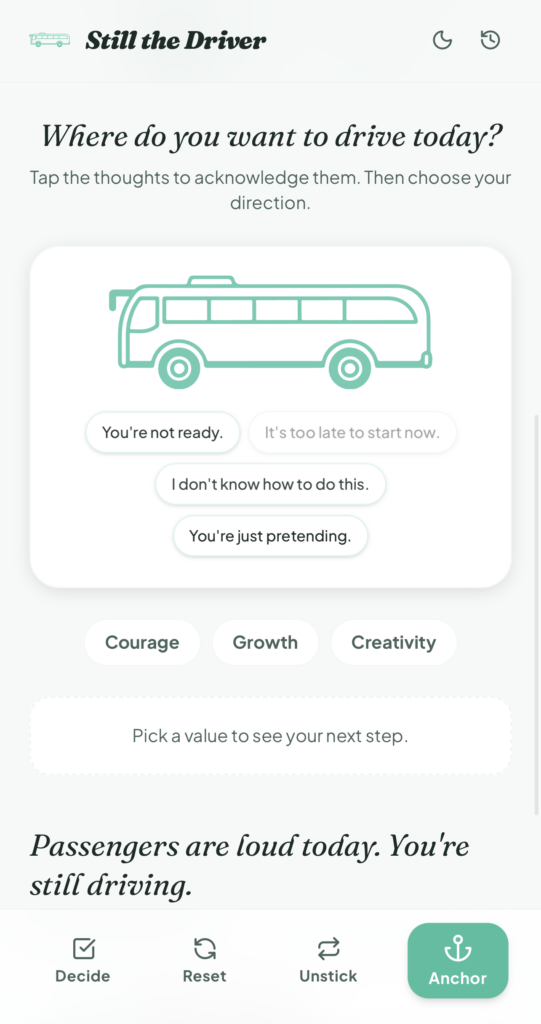
This is my favorite part of the whole build.
In ACT (Acceptance and Commitment Therapy) there’s a metaphor called Passengers on the Bus. The idea is that your intrusive thoughts, fears, and perfectionism are just loud, annoying passengers riding in your bus. They can yell directions at you all day, but they don’t get to touch the steering wheel.
I built a digital version. The screen shows a bus, and floating around it are thought bubbles: “You’re not ready.” “This could go badly.” “What if you fail?” When you tap one of those anxious thoughts, it doesn’t vanish. It dims, scales down, and drifts to the back.
This is the part that’s hard to get right in a worksheet and almost impossible to get right in a conversation. The goal isn’t to clear your mind. The goal is to acknowledge the noise and drive anyway. Tapping a thought and watching it physically move to the back seat reinforces that in a way that writing “I notice this thought” on a piece of paper never will.
I love apps. I’m the person who will spend an entire Saturday testing a new task manager or journaling tool just to see how it thinks. So when I say there are genuinely great mental health apps out there, I mean it. I’ve used a lot of them and I’ve written about quite a few.
But even the best apps are built for a million people at once. They have to be. That’s how the business model works. So they give you a library and hope you find the right book.
The problem is that when you’re mid-spiral, you don’t need a library. You need the one thing that works for you. And no general-purpose app can know how this specific person’s perfectionism shows up. It can’t know that the stress cycle concept clicked but the grounding exercises didn’t. It can’t know that this client responds to blunt, direct language and would bounce off anything that sounds too soft or clinical.
I know all of that because I sat across from this person. We figured it out together. I tracked what worked. That’s the part no app can replicate, no matter how good it is. Someone who actually knows how your specific brain gets stuck, what gets it unstuck, and what format it needs to be in so you’ll actually use it.
The app I built isn’t a teaching tool. It’s a delivery system for things that already landed. And the only reason it works is because the coaching happened first.
Here’s what I believe at a fundamental level: if the standard approach is exhausting you, the problem isn’t you. It’s the approach. You don’t need to try harder to fit into a system that wasn’t built for your brain. You need an environment that speaks your language.
I build custom tools like Still the Driver for my 1-on-1 coaching clients. A pocket-sized, personalized reset console that’s there when you need it. Reach out if you want to explore working together.